
 Always on
Keep work moving 24/7.
Agents continue long-running delivery work even when your team is offline.
A team of AI engineers uses your business context to plan and build across repositories, tests the change in a sandbox, and delivers a pull request with review and evidence.
 Watch product demo

What comes back A PR with code review and sandbox evidence.


 Always on
Agents continue long-running delivery work even when your team is offline.
 Parallel execution
Agents plan, build, review, and verify different parts of a request at the same time.
 Autonomous bug fixes
Turn approved Jira bug tickets into implemented, sandbox-validated, reviewer-ready changes.
 PR review and validation
Code Review and QA agents review your pull request, run tests, and validate the change in a sandbox, with findings and evidence ready for your team.
Agents use your company's context to plan, build across repos, and verify the change.
Business rules, architecture, and memory.
Describe the feature you need.
Plan and build across repos in one workspace.
QA tests and Code Review check the change.
Code, review, and evidence ready to merge.
Learn from each verified change
Agents use business rules, system architecture, API contracts, past decisions, and ownership to understand the request. Connected tools, prior evidence, and approved memory carry that context through the run.
Specialists scope and design the change, then build in parallel across the affected repos. Owners can approve key decisions or redirect the work in the shared session.
Set which models, tools, and environments agents can use. Apply budgets and approval gates, and use the audit trail to see which actions agents took and who approved them.
QA tests the change in a sandbox, and Code Review checks the implementation. The PR carries the review, test results, logs, screenshots, and contract checks. Your team decides when to merge and ship.
Approved facts, fixes, and reviewer decisions return to memory. Run evidence helps the team improve skills, checks, workflows, and specialist agents.
They plan, code, test, review, verify, and iterate in one coordinated run. Guide key decisions, approve important gates, and see the evidence before anything ships.
Agents understand your product and engineering context.
Architecture, decisions, contracts, owners, and affected repositories stay connected to the request across every stage.
 Prinevo memory benchmark
Read the benchmark paper
Plan, build, and verify with a specialist agent team.
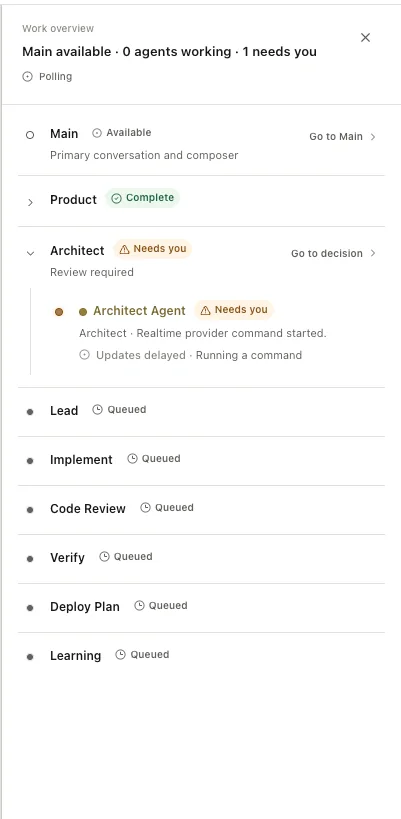
Work with your agent team in one multiplayer AI workspace. Configure specialist roles for planning, product, architecture, implementation, QA, code review, and cost analysis. Planning turns the request into scoped work; cost analysis helps review usage and budgets. Your team shares context and steers decisions in the same session.
One shared session. Your team stays in control.
Share the session with teammates to follow agent progress, discuss blockers, and review evidence together. Approve important decisions, redirect the work, or give feedback without losing the request's context.
A QA agent validates your changes in a sandbox.
Automated code review and QA testing.
Your team receives the cross-repo change, code-review findings, test results, logs, screenshots, and decision context in a PR ready to review.
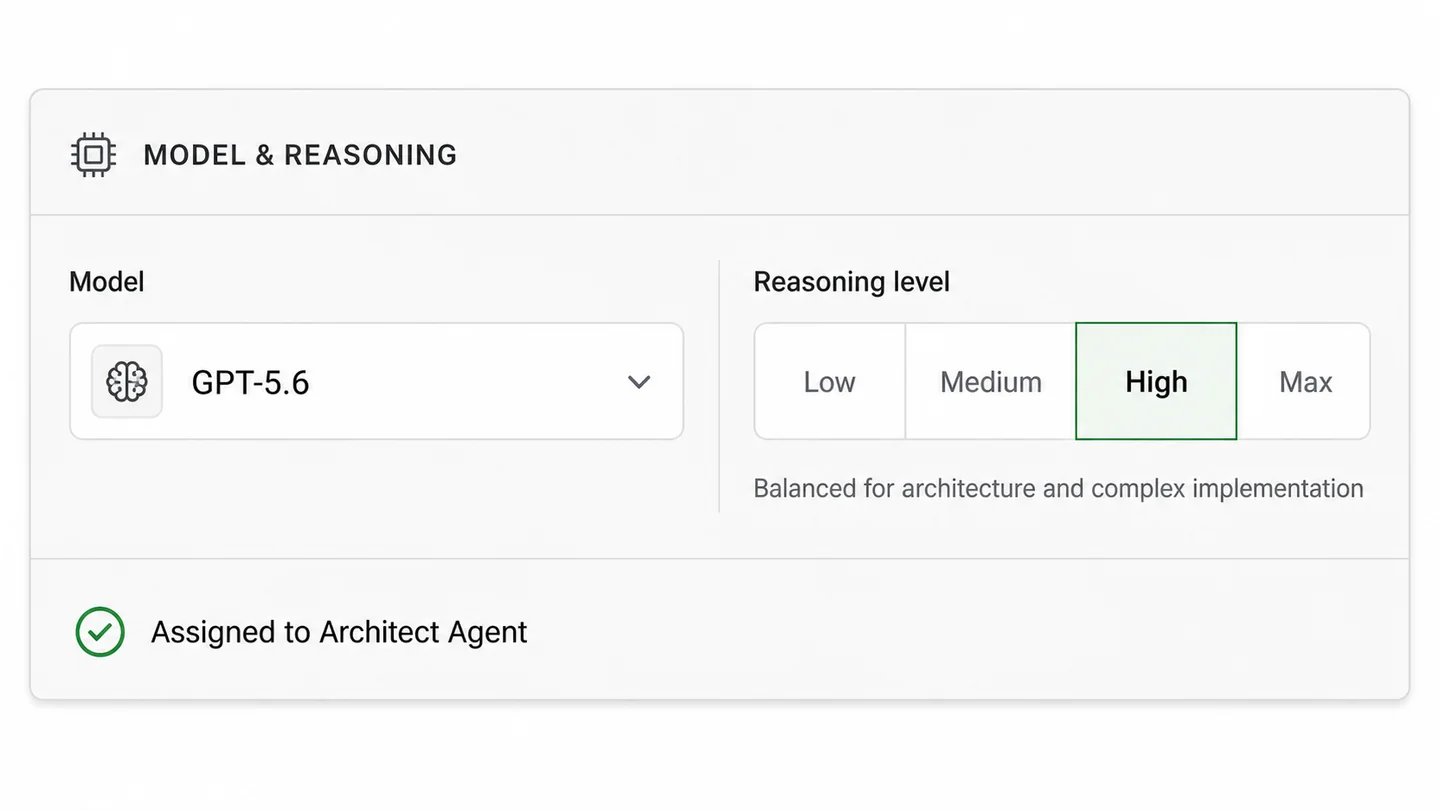
Ready for reviewUse the right model for each job.
Choose the model and reasoning level for every specialist agent based on the complexity, quality bar, speed, and cost of the task.
Control what every agent can access.
Scope tools, environments, data, and actions by agent. Every request, approval, tool call, and change is recorded in an audit trail.
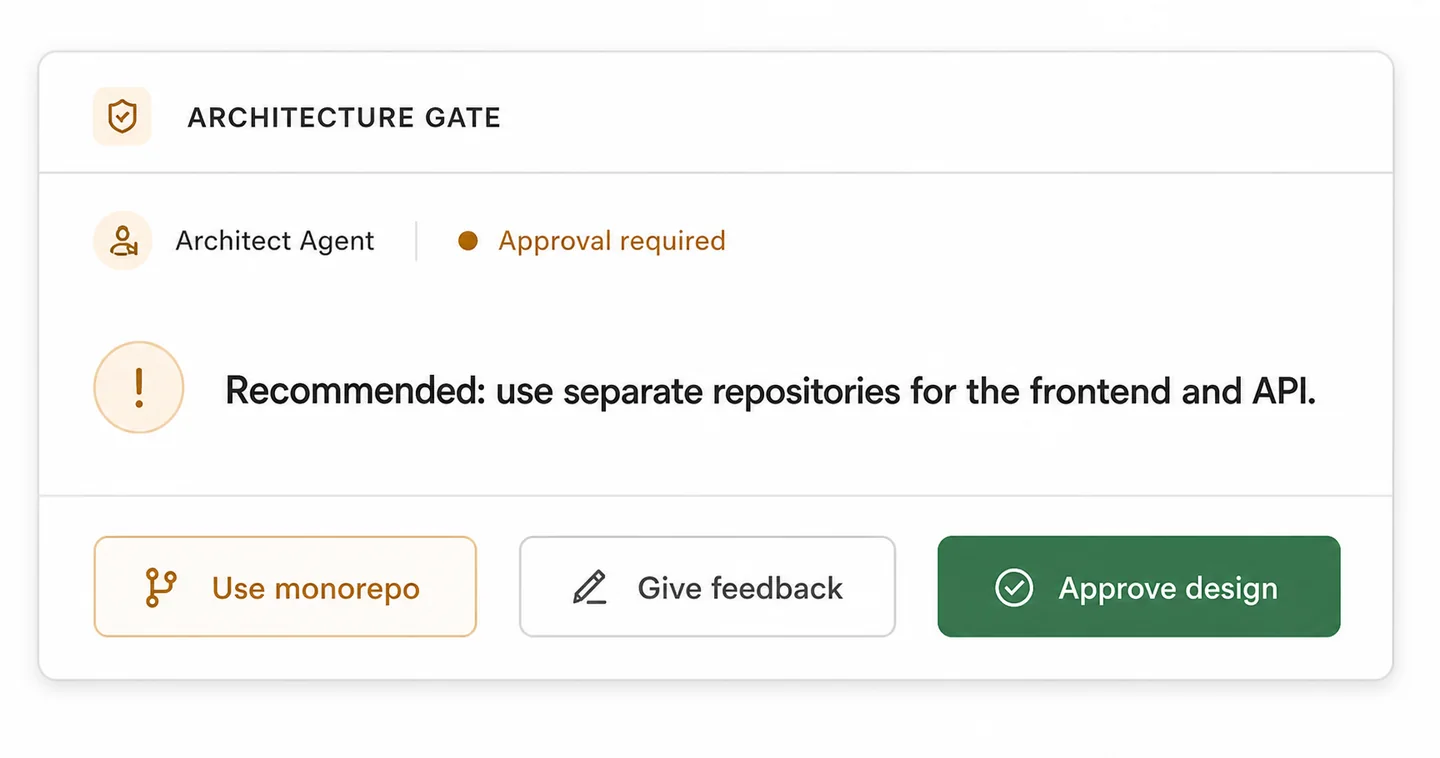
Guide work at the right gates.
Approve, nudge, retry, or redirect meaningful work before it drifts. Low-risk changes can continue autonomously when the evidence is strong.
Control cost across every agent run.
Set budgets and track usage and spend by feature, agent, stage, and model. Use higher-capability models where quality matters and lower-cost models for routine work.
Available in Slack, with shared context and review gates carried into the work.
Start work where your team already works.
Ask Prinevo to review a pull request or start a delivery workflow from Slack without losing the governance and context behind the work.

Start work from Slack or approved tickets, connect the repositories and tools your team already uses, and bring your own Claude or Codex subscription.




The software factory improves with every run.
Learning stores approved facts, decisions, failed checks, rollout results, and reusable fixes so every new run starts with better context. Evolution uses run traces to grow the skills and specialist agent team your company needs.
Completed work, reviewer decisions, failed checks, rollout results, and reusable fixes are stored as approved organizational memory so the next run starts with better context and avoids repeating mistakes.
Run traces reveal where the system needs new skills, stronger checks, new workflows, or new specialist agents. The agent team grows with your company and the work it needs to deliver.
Your organization sets the boundaries. Give agents shared business and engineering context, scope their tools and access, and require human approval at key decisions. QA and Code Review return a verified PR with evidence. Your team decides what merges and ships.
Connect business rules, architecture, service contracts, affected repositories, and accountable owners. Agents work from shared context and prior decisions, rather than reconstructing your organization at every handoff.
The delivery control plane keeps agent definitions, task state, handoffs, artifacts, and human decisions together. Teams set direction, steer work, and approve key gates while specialist agents coordinate the change.
QA runs the change in a sandbox and Code Review examines the implementation. Bring test results, logs, screenshots, review findings, and unresolved gaps to the PR. Verification supports your release decision; it does not replace it.
Choose approved models, scope tools and access by stage, and set human approval gates. Review usage, decisions, and run evidence together so engineering owners can intervene before sensitive work proceeds.
Review run evidence and human decisions before promoting reusable knowledge, checks, or workflow changes. Traces help identify missing skills and specialist roles. Keep learning accountable rather than treating every agent output as accepted organizational knowledge.
Prinevo gives your team a software factory that can keep agent work alive across long tasks, reuse the right context, and move projects through verification faster.
Discuss BYOC, SSO, provisioning, private networking, audit export, retention, and support. Availability and implementation scope are confirmed in your enterprise proposal, not assumed to be included by default.
See how shared context, specialist agents, governance, sandbox verification, and learning connect in one delivery system.
Codex, Claude, Cursor, and custom agents can produce code quickly. The software factory adds the multi-agent context layer, governance, and verification path that make each change coordinated, verified, and ready for review.
Cost, reliability, security, and compliance issues all connect back to code, infrastructure, ownership, runtime behavior, deployment history, and customer impact.
Cost increased 28% after the analytics worker deployment.
Correlate spend, deployments, logs, traces, and query metrics to one repository, module, and path.
Find the root cause, estimate savings, make the code change, and open a PR with validation evidence.
Produce validated production-ready changes with architecture notes, coordinated repo updates, review context, test evidence, rollout plan, and a PR ready for deployment.
Connect cloud spend, deploy history, metrics, queries, workers, repos, and owners.
Trace incidents to code paths, rollouts, monitors, service contracts, and regression tests.
Review changes against data flows, policies, audit needs, ownership, and release readiness.
Need help with setup or want us to run this for you? We offer FDE support as well.
Bring a cross-repo feature or an existing PR. We’ll walk through where Prinevo can help, from planning and building the change to checking it in a sandbox.
Want to check your setup first? Take the Software Factory Readiness Assessment
Prinevo / For agents
The same website content in Markdown, without animations or product mockups. Read this page or use the full-site text for the product, pricing, guides, and articles.