Blog
Building with a software factory
Your team of agents, from feature request to verified change.
Build and coordinate agents
- Working with agents
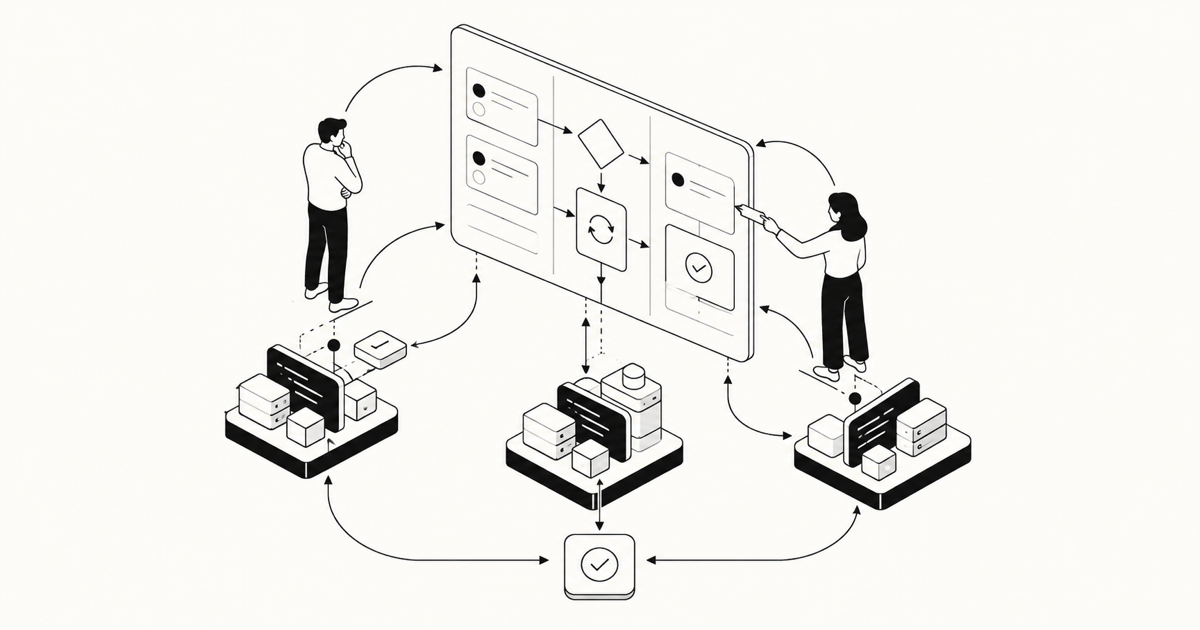
How Engineering Teams Work With a Team of Coding Agents
See how people and agents share decisions, handle changing requirements, resolve review findings, and hand over work.
-
Software factory guide
How to Build an Agentic Software Factory
Build the delivery setup around coding agents, then check which foundations your team already has and what is missing.
- Multi-agent coordination
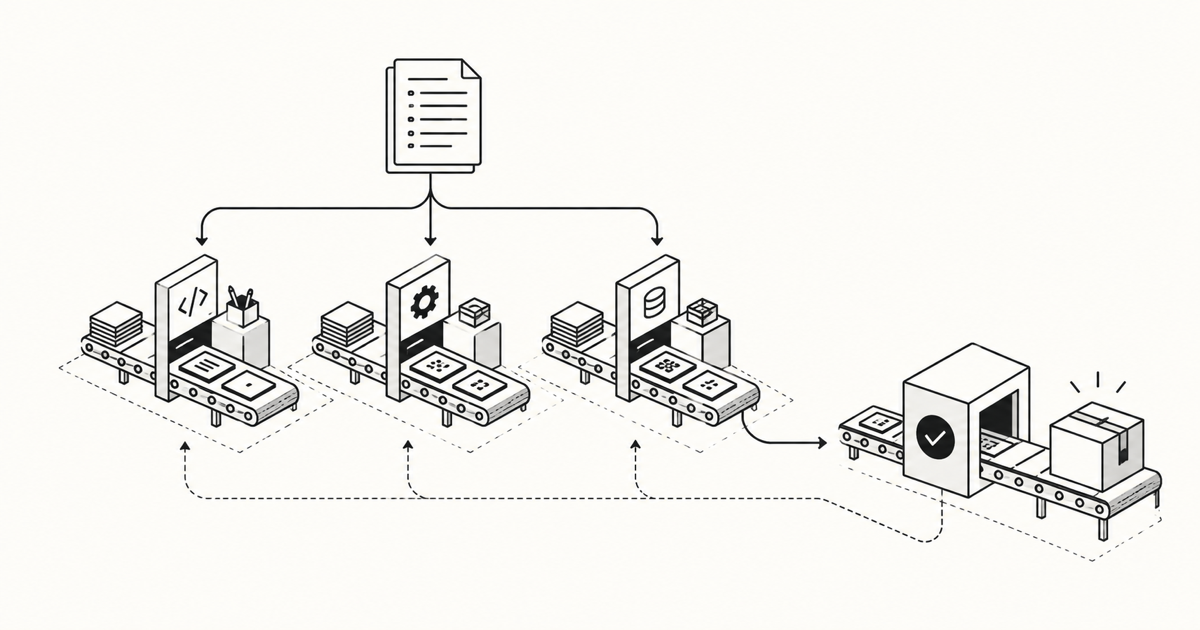
How to Run Multiple Coding Agents Without Conflicting Changes
Coordinate parallel work with clear ownership, shared contracts, explicit handoffs, and verification of the combined change.
-
Agent architecture
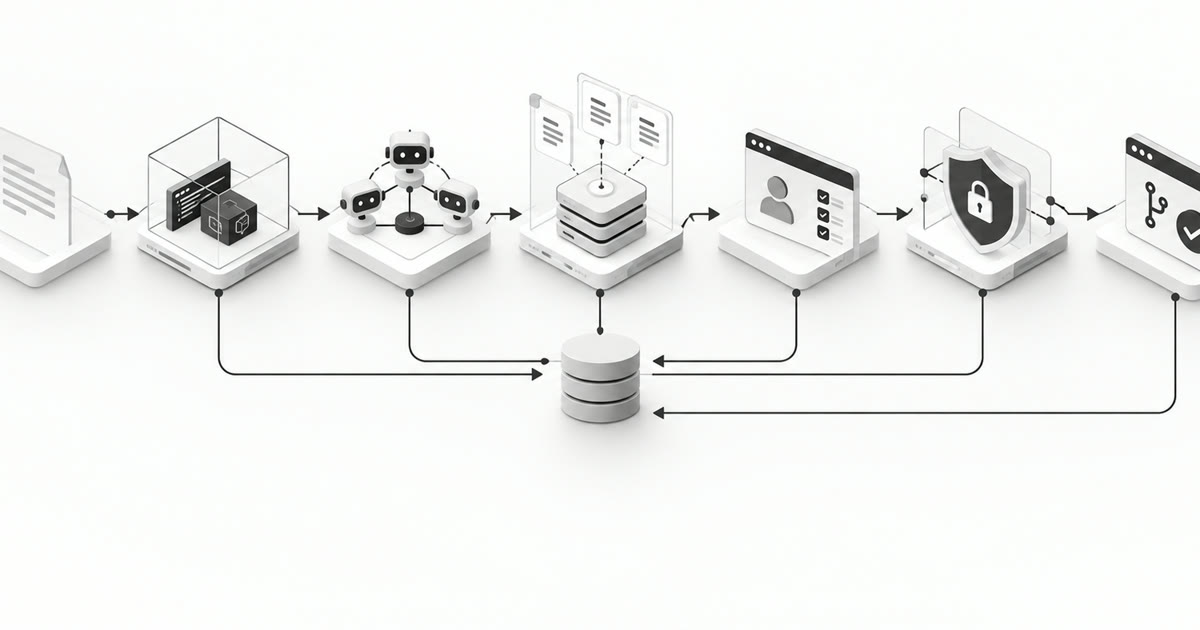
The Coordination Backbone -Architecting Multi-Agent Orchestration
How durable state, an agent catalog, and transition policy make multi-agent work reliable.
-
Software factories
5 Pillars of a Software Factory
Coding agents make code generation faster, but delivery still depends on context, coordination, verification, rollout planning, and learning loops.
-
Agentic systems
Pillars of an Autonomous Agentic System
Autonomous agentic platforms need shared context, governance, and a self-learning loop before agents can safely take on more work.
Start here
- Engineering throughput
Do Faster Coding Agents Make Your Engineering Team Faster?
Track human effort, review queues, verification, rework, and delivered changes to assess whether faster coding helps the team.
-
Coding agents
Why Individual Coding Agents Struggle to Deliver Complete Changes
Why a local coding win can still leave a cross-system feature unverified, and what coordinated agents need to share.
-
Software delivery
From Feature Request to Production: What Coding Agents Still Miss
Five questions that separate a fast PR from a feature delivered safely in production.
-
Software factory
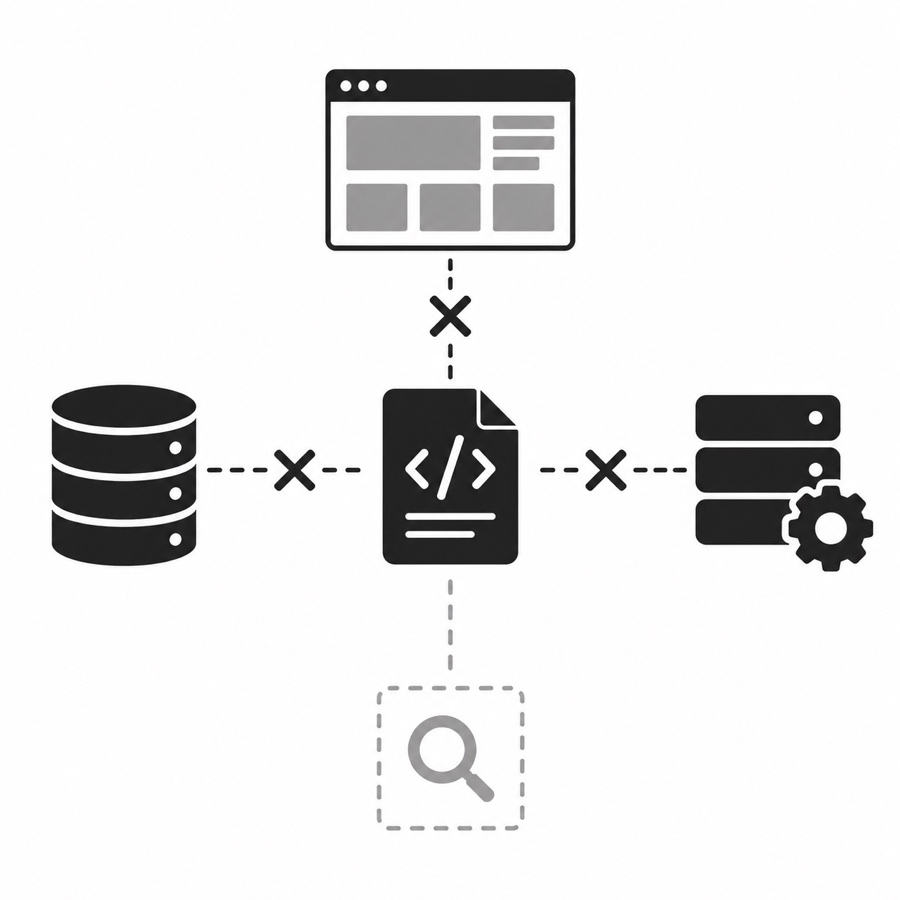
10x More Code Without Structure Can Create 10x More Chaos.
Coding agents made coding faster. A software factory gives teams structure, gates, owners, context, and verification to move fast safely.
Verify changes and stay in control
-
Verification guide
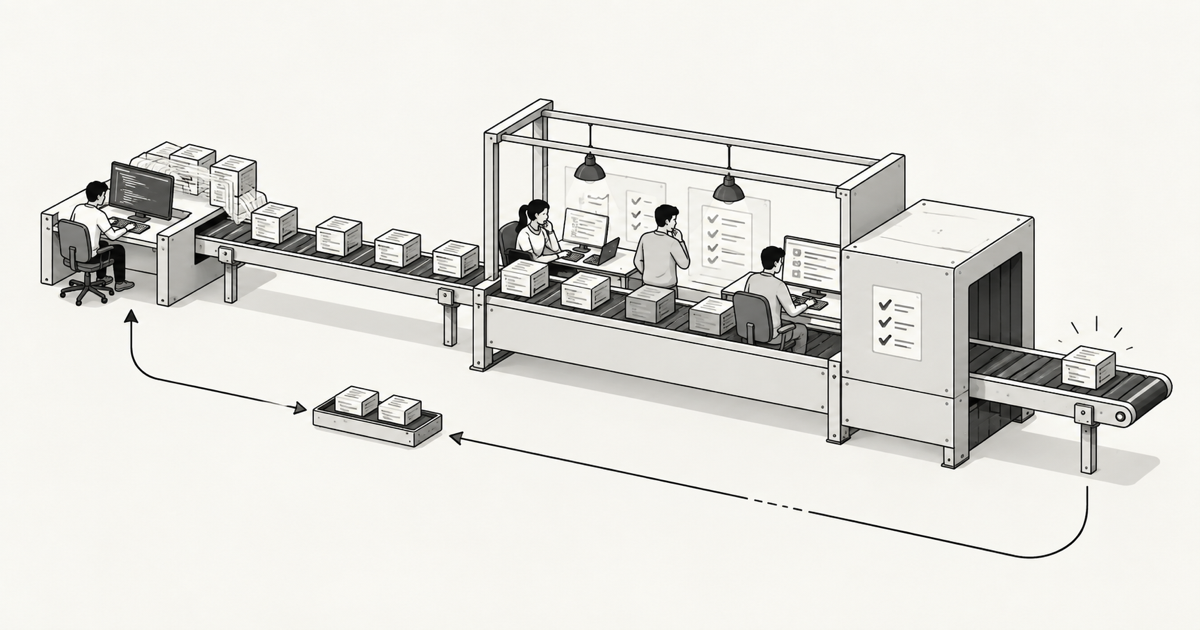
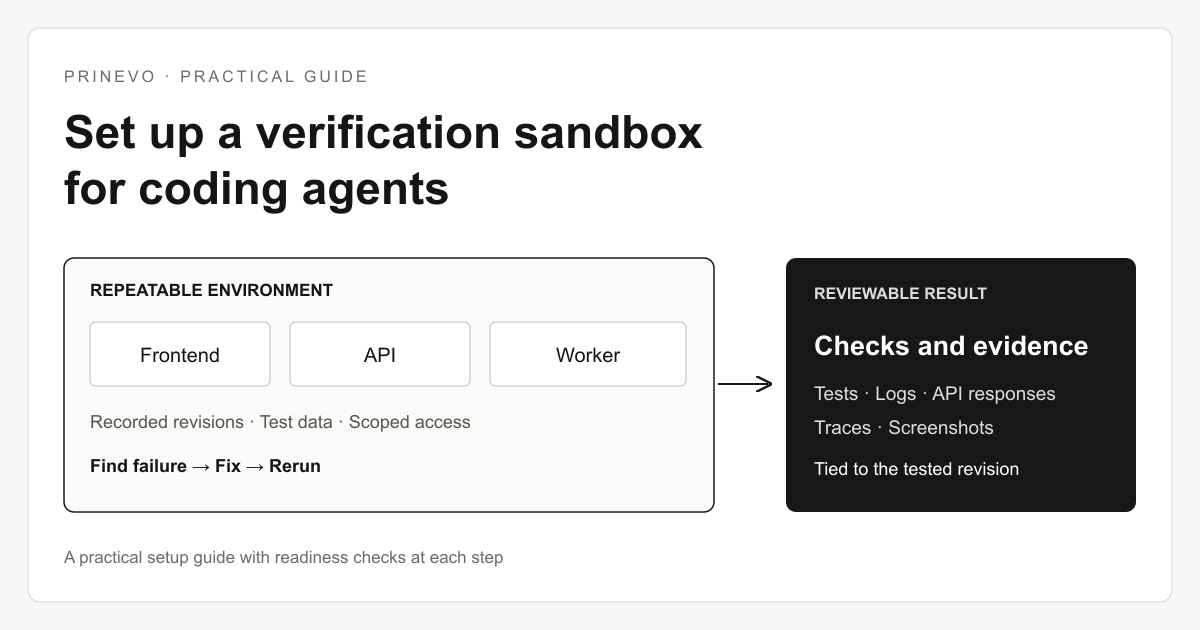
How to Set Up a Verification Sandbox for Coding Agents
Build a repeatable sandbox with test data, scoped access, useful failure feedback, and evidence tied to the tested revision.
-
Agent governance
Reduce AI Slop With Configurable Expert Gates.
Why coding agents need configurable PRD, HLD, LLD, implementation, and verification gates so teams can move fast without downstream cleanup.
Reuse context and learning
- Engineering context
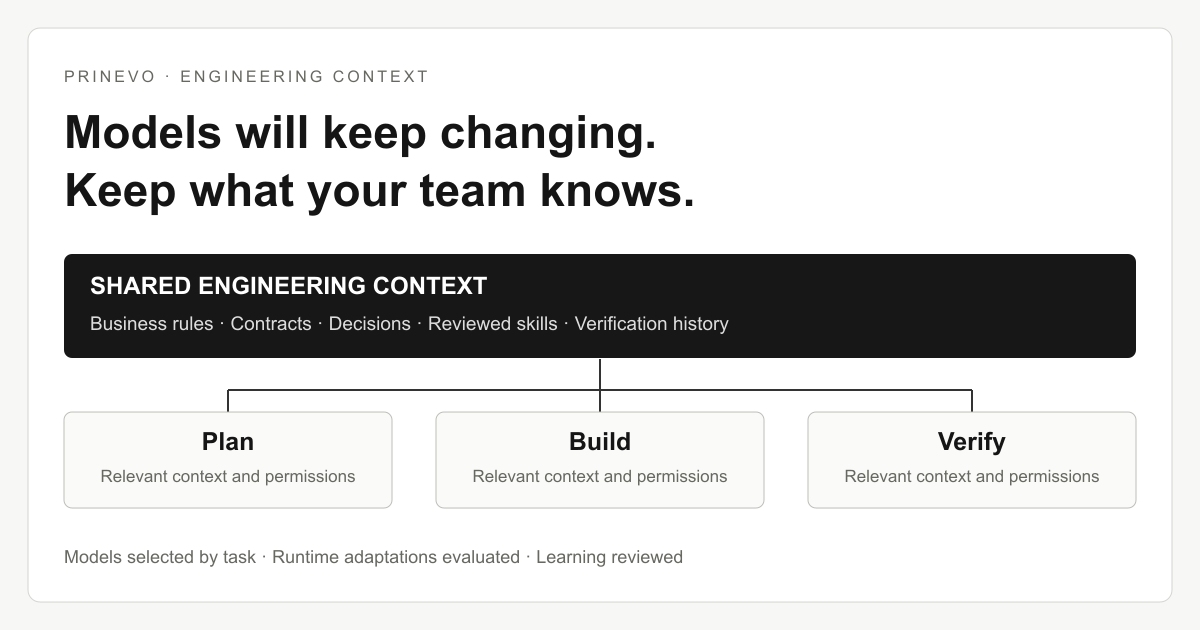
Models Will Keep Changing. Your Engineering Context Should Stay.
Keep business rules, skills, decisions, and verification history reusable as the models doing the work change.
-
Research
Prinevo Memory: A Context Graph for Long-Term Agent Memory
How typed capture, bi-temporal knowledge, and hybrid retrieval deliver 83.89% on LoCoMo and 82.60% on LongMemEval.
-
Agent context
Retrieval Debt Is the New Technical Debt. Software Factories Help Reduce It.
Why effective context engineering starts with code structure, then uses focused tasks, specialist agents, and verification to ship changes.
-
Compounding systems
Building a Software Factory: From Prompts to Compounding Systems
Why coding agents need two layers around them: reusable context and policy, plus sandbox verification that improves with every run.
Evaluate Prinevo
-
Prinevo workflow
How Prinevo Takes a Feature Request to Production Delivery
See quick and full lanes, accountable owners, review loops, verification, and the path to a reviewer-ready PR.
-
Agent evaluation
How to Evaluate an AI Agent Team on a Real Engineering Change
A practical scorecard for a real-change pilot: human effort, verification, reviewer rework, lead time, and cost.